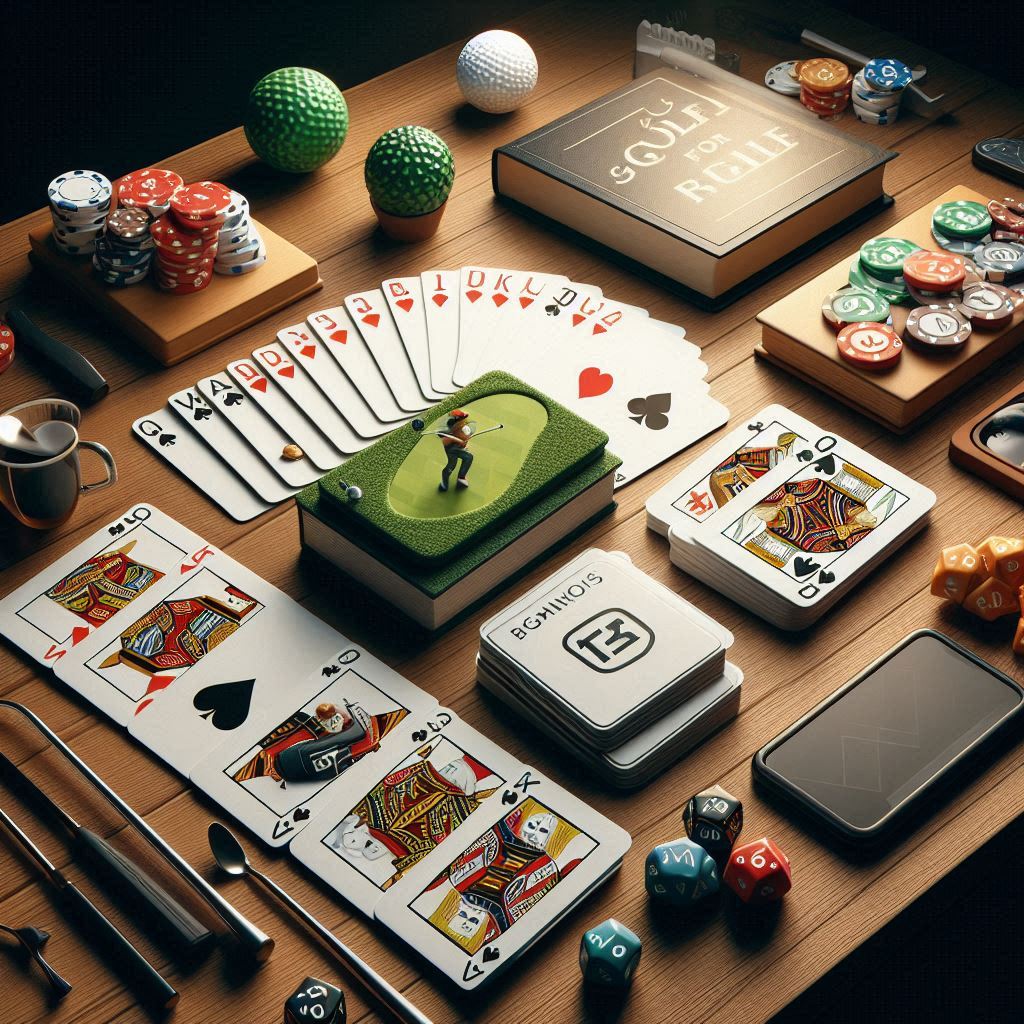
paintoncanvas.net– The golf card game is a fun, strategic game that combines memory, planning, and a bit of luck. Perfect for family game nights or casual play with friends, Golf challenges players to minimize points while making clever swaps. If you’re new to the game, this guide will help you understand the golf card game rules for beginners and provide winning tips so you can play like a pro.
What is the Golf Card Game?
The golf card game is a low-score game, where the goal is to finish each round with the fewest points possible. It typically uses a standard 52-card deck, with numbered cards worth their face value, face cards (King, Queen, Jack) worth 10 points, and Aces valued at 1 point. Some variations include jokers, which act as wild cards or zero-point cards.
Like rummy games, Golf emphasizes strategy and planning, but its unique grid-based system and memory element make it stand out. Players aim to swap high-value cards for lower ones, creating a more favorable hand over the course of several rounds.
Setting Up the Game
-
Deal the Cards: Each player receives six cards, arranged in a 2×3 grid, face-down. Players flip over two of their cards, giving them an initial glimpse of their hand.
-
Prepare the Draw Pile: The remaining cards form the draw pile, placed face-down. The top card is flipped to start the discard pile.
-
Objective: Players aim to reduce their grid’s total points by swapping cards from the draw or discard pile. The player with the lowest total score at the end of the round wins.
This setup encourages strategic thinking and memory. Players must remember which hidden cards are high or low while observing opponents’ moves.
Golf Card Game Rules for Beginners
-
Taking Turns: On your turn, draw a card either from the draw pile or the discard pile. After drawing, replace one of your cards in the grid with the drawn card, placing the replaced card into the discard pile.
-
Revealing Cards: Whenever a card is replaced, flip it face-up. This allows you and your opponents to track which cards have been swapped, making memory and observation key skills.
-
Ending a Round: A round ends when a player has revealed all of their cards or when a set number of turns are completed. Players then calculate their points, and the lowest score wins the round.
-
Scoring: Numbered cards score their face value, face cards are worth 10 points, and aces are worth 1 point. Jokers, if included, are usually zero points. Minimizing your total is essential to winning.
Beginner Tips and Tricks
-
Focus on Low-Value Cards: The main strategy in Golf is to reduce points. Swap high-value cards for low ones whenever possible to keep your total low.
-
Remember Hidden Cards: Track which of your cards remain face-down and their approximate values. This memory element can help you make better swaps and avoid high-point penalties at the end of the round.
-
Use the Discard Pile Wisely: The discard pile can reveal cards you need. Pick up low-value cards to improve your grid. Avoid discarding cards that might help your opponents reduce their points.
-
Plan Your Swaps: Not every draw requires an immediate swap. Sometimes holding a card until the right moment allows you to replace a high-value card or complete a low-point set efficiently.
-
Observe Opponents: Watch the cards your opponents are swapping and discarding. This gives insight into their strategy and helps you decide which cards to discard without giving them an advantage.
Advanced Golf Card Game Strategies
-
Joker Management: In versions with jokers, use them strategically to replace high-point cards or complete sets. Timing their use can dramatically lower your score.
-
Early Swaps: Swap high-value cards early in the round to reduce penalty risk later. Delaying swaps might leave you with a grid full of high-point cards.
-
Memory and Pattern Recognition: Skilled players track the positions of hidden cards and predict opponent behavior. This can give you a competitive edge in tight rounds.
-
Adapt to Round Progression: Early rounds are simpler, allowing you to form low-point combinations quickly. In later rounds, more cards are dealt, increasing complexity. Adjust your strategy based on how many cards you hold and what’s revealed.
Common Mistakes to Avoid
-
Rushing: Trying to go out too quickly can leave high-value cards in your grid, increasing penalty points.
-
Discarding Smart Cards: Be cautious about what you discard; opponents can pick up useful cards.
-
Ignoring Memory: Forgetting the value of hidden cards can cost you points. Keeping track is crucial.
Why Play Golf Card Game?
The golf card game is engaging because it balances luck and strategy. Each round offers a new challenge as players try to minimize points and outsmart their opponents. Its mix of memory, planning, and timing keeps the game fresh, while the low-score objective adds an exciting twist to traditional card game mechanics.
Whether played casually or competitively, Golf is accessible for beginners and rewarding for seasoned players. Understanding the rules, employing smart swaps, and observing opponents are keys to mastering the game.
Final Thoughts
Learning the golf card game rules for beginners is the first step to becoming an effective player. With practice, memory skills, and strategic swaps, you can consistently minimize points and win rounds. By focusing on low-value cards, using the discard pile wisely, and tracking hidden cards, you’ll gain the upper hand in every game.
The golf card game offers hours of fun and mental exercise, making it perfect for game nights or casual gatherings. So shuffle your deck, plan your moves, and enjoy the challenge and excitement that Golf brings to every round!